The Definitive Guide to MOM Employment Pass Translation & Verification in 2026
Singapore continues to be one of the world’s most attractive destinations for global talent. However, with opportunity comes increasing scrutiny. The Ministry of Manpower (MOM) has significantly strengthened its Employment Pass (EP) framework, especially around education verification and document translation.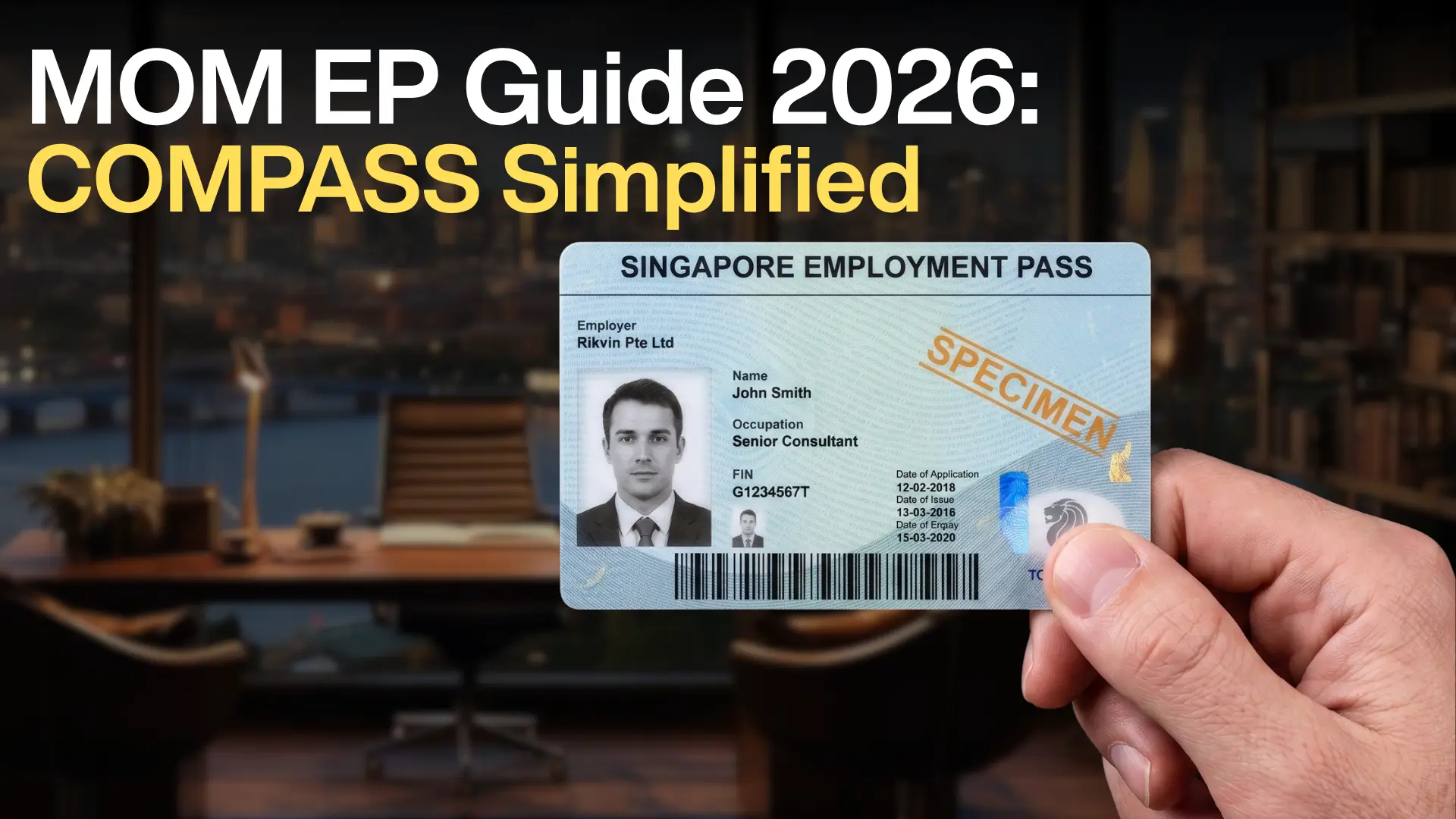
If you’re an HR professional, employer, or foreign candidate navigating EP applications in 2026, understanding these changes is no longer optional—it’s critical.
This guide breaks down everything you need to know, from COMPASS scoring to translation requirements, ensuring your application is compliant, efficient, and successful.
A New Era of Verification: What Changed?
The EP application process has undergone a fundamental shift since September 2023, when MOM introduced mandatory third-party verification for educational qualifications.
Previously, employers bore limited responsibility for verifying credentials. Today, the system operates on what can best be described as a “trust-but-verify” model. Employers are now accountable for ensuring that every qualification submitted is authentic and properly validated.
If a qualification is found to be false:
- The EP is revoked immediately
- The candidate must leave Singapore
- The employer’s compliance record is affected
This is not just procedural—it’s a legal obligation with real consequences.
Understanding COMPASS in 2026
At the center of the EP framework is the COMPASS (Complementarity Assessment Framework), a points-based system that determines eligibility.
Candidates must achieve at least 40 points, assessed across six criteria:
- C1: Salary
- C2: Qualifications
- C3: Diversity
- C4: Local employment support
- C5–C6: Bonus criteria
Why C2 (Qualifications) Matters More Than Ever
The qualifications criterion (C2) is where translation and verification play a decisive role.
Points are awarded based on:
- The institution’s ranking
- Whether the qualification appears on MOM’s degree-equivalent list
In 2026, MOM introduced a major update:
Qualification scoring now depends on the specific faculty or program, not just the institution.
This means:
- Two candidates from the same university can receive different scores
- Faculty-level recognition can determine approval or rejection
For borderline applications, these 20 points can make or break the outcome.
Translation Requirements: Precision Is Mandatory
If your documents are not in English, you must submit:
- The original document
- A certified English translation
- Combined into one single PDF file
Certified vs Notarized Translation
A common misconception is that notarized translations are required. They are not.
- Certified Translation:
Includes a signed statement from a professional translator confirming accuracy. This is the standard MOM requires. - Notarized Translation:
Only verifies the identity of the translator—not the accuracy of the translation.
For MOM purposes, certified translation is mandatory, while notarization is unnecessary unless required for other jurisdictions.
The Importance of Proper PDF Formatting
MOM requires documents to be uploaded as a single merged PDF, and even the order of pages matters.
Best Practice:
- English translation first
- Original-language document second
This ensures that officers reviewing the application can immediately understand the content without friction.
Partial translations or summaries are not accepted. Every element—stamps, seals, signatures—must be translated and included.
Verification: The Accredited Agency Requirement
MOM recognizes only 12 accredited screening agencies for education verification. Using any other provider results in automatic rejection.
These agencies verify:
- The authenticity of the qualification
- The accreditation status of the institution
Processing Timeline:
- Standard: 7–15 business days
- Extended: 15–25 days (for countries like India and South America)
Planning ahead is essential, especially for time-sensitive applications.
The “September 2023 Gap”: A Hidden Risk
One of the most overlooked compliance issues is the verification reference number requirement.
Since September 2023:
- Every verification report must include a unique MOM reference number
- This number must be entered during EP submission
The Problem:
Reports issued before September 2023:
- Do not contain this reference number
- Are not valid under current rules
The Solution:
You must:
- Request a reissued report from the screening agency
- Or conduct a new verification
Without this reference number, submission will fail—no exceptions.
Strategic Decision: Should You Declare Qualifications?
Interestingly, declaring qualifications is not always mandatory.
If a candidate can achieve 40 COMPASS points without C2:
- Verification may not be required
- Translation costs can be avoided
However, this is a strategic decision.
Consider:
- Will omitting C2 weaken your overall score?
- Could those 20 points improve approval chances?
With 2026 changes affecting scoring, employers are encouraged to:
- Use MOM’s Self-Assessment Tool (SAT)
- Evaluate scenarios before submission
Costs Involved
While not excessive, costs should be factored into planning:
- Verification Fees: ~$105–$150 per qualification
- Translation Fees: Starting from ~$38 per page
- Additional costs may apply for:
- Accreditation checks
- Expedited processing
These are modest investments compared to the cost of rejection or delays.
Common Mistakes That Lead to Rejection
Many EP applications fail due to avoidable errors. The most frequent include:
- Submitting old verification reports (pre-Sept 2023)
- Using non-accredited agencies
- Incorrect PDF formatting (wrong order or incomplete merge)
- Confusing notarization with certification
- Missing faculty-level details in qualification data
Each of these can delay processing or result in outright rejection.
Step-by-Step Workflow for Success
To ensure a smooth EP application process:
Step 1: Prepare Documents
- Obtain original certificates
- Ensure high-quality scans
Step 2: Get Certified Translation
- Engage a professional translation provider
- Ensure full and accurate translation
Step 3: Complete Verification
- Use a MOM-accredited agency
- Confirm inclusion of reference number
Step 4: Merge Documents
- Combine translation and original into one PDF
- Place translation first
Step 5: Submit Application
- Upload documents
- Enter verification reference number
Following this structured workflow minimizes risk and ensures compliance.
2026 Compliance Mindset: What Employers Must Do
The biggest takeaway from these changes is this:
EP applications are no longer administrative—they are compliance-driven processes.
Successful employers:
- Capture qualification details early
- Audit verification documents before submission
- Work with experienced translation providers
- Plan timelines proactively
The difference between approval and rejection often lies in execution details, not candidate quality.
Final Thoughts
Singapore’s MOM has transformed the Employment Pass system into a high-integrity, verification-driven framework.
While the process may seem complex, it is entirely manageable with the right preparation and understanding.
The key is simple:
- Get your translation right
- Ensure your verification is compliant
- Align your strategy with COMPASS scoring
When done correctly, the rest of the application process falls into place.